
Visions of Women & Cinema in Tunisia and MoroccoCLUB 18+240 min
Synopsis
With funding support from the Trinity Long Room Hub Arts & Humanities Research Institute, Light House is delighted to present a programme of two recent restorations of feminist films from North Africa. These landmark screenings of films about women’s roles and significance in Tunisian and Moroccan society and history, will be accompanied by an intro and Q&A with the filmmakers, Selma Baccar and Farida Benlyazid, who will be in attendance. Complementary mint tea and sweets reception is offered during the intermission between the two screenings. This is sponsored by the Embassy of Morocco in Dublin.
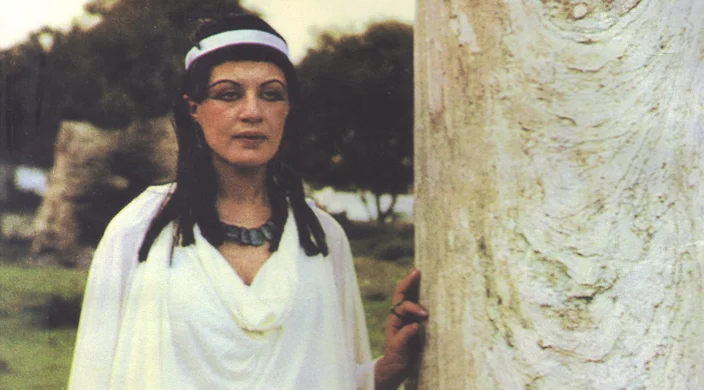
The screening will first feature docu-fiction film FATMA 75 (Selma Baccar, 1976), a distinct blend of archival footage, interviews and re-enactments through which the protagonist Fatma seeks to connect with Tunisian women’s history from ancient times up to the 1970s. The programme also presents THE DOOR TO THE SKY (Farida Benlyazid, 1989), a feature film that centres on Nadia, a Moroccan émigré who returns to Fès in order to reconnect with her heritage by transforming her family home into a sanctuary for Muslim women.
Selma Baccar, Fatma 75 (Tunisia, 1976, 52m)
Fatma 75 is a landmark feminist film that traces the history of women’s struggle for equality in Tunisia. At its centre is Fatma, a university student researching women’s rights, whose presentation on the topic becomes a journey through centuries of Tunisian history. Baccar brings historical women and forgotten voices into the present, connecting their experiences to the women’s movements of the 1930s–50s and to the reforms introduced after independence. Blending documentary and fiction, Fatma 75 is both a history of women’s liberation and a questioning of how far that liberation has truly progressed.
Farida Benlyazid, The Door to the Sky (Morocco, 1989, 1h47m)
The Door to the Sky: After many years living in France, Nadia returns to Fès when her father is dying. His death prompts her to reconnect with Moroccan culture and spirituality. She discovers the Sufi traditions of Islam and is so inspired that she transforms the family home into a Zaouia/Zawiyya, a spiritual sanctuary for women. Blending questions of identity, faith, female friendship and liberation, the film offers a distinctly female vision of Moroccan spirituality. The film challenges the opposition between tradition and modernity, suggesting instead that Sufi practice can provide women with a space for inner freedom, solidarity and self-determination.